InterProcessMutex 分布式锁
InterProcessMutex是常用的一个使用ZK的分布式锁,它会在我们指定的前缀下面创建类型为有序临时的临时节点,然后序号最靠前的节点会获取到锁。 如果某个持有锁的线程挂了之后,对应的节点就会被删除,如果这时候有线程在等待锁,就会获取到锁
类定义
public class InterProcessMutex implements InterProcessLock, Revocable<InterProcessMutex>变量
private final LockInternals internals;    //一些内部实现,例如路径,锁名,客户端等
private final String basePath;
//用来存放线程和锁数据的关系,其中的LockData下面有
private final ConcurrentMap<Thread, LockData> threadData = Maps.newConcurrentMap();
private static final String LOCK_NAME = "lock-";   //锁的前缀
private static class LockData
{
final Thread owningThread; //拥有锁的线程
final String lockPath; //锁的路径
final AtomicInteger lockCount = new AtomicInteger(1); //锁的数量
private LockData(Thread owningThread, String lockPath)
{
this.owningThread = owningThread;
this.lockPath = lockPath;
}
}internalLock (实际获取锁的逻辑)
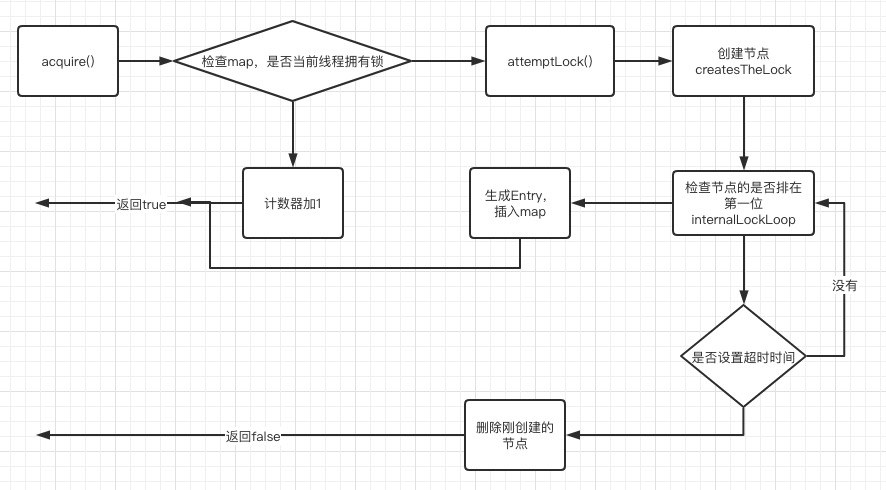
private boolean internalLock(long time, TimeUnit unit) throws Exception
{
    /*
       Note on concurrency: a given lockData instance
       can be only acted on by a single thread so locking isn't necessary
    */

    Thread currentThread = Thread.currentThread();    //取到当前变量

    LockData lockData = threadData.get(currentThread);  //根据当前变量取到对应的锁
    if ( lockData != null )                           //如果已经有锁存在了,就对锁的数量加一
    {
        // re-entering
        lockData.lockCount.incrementAndGet();         //使用了原子操作,所以同时只会有一个线程进行加一
        return true;
    }

    String lockPath = internals.attemptLock(time, unit, getLockNodeBytes()); //尝试获取锁
    if ( lockPath != null )     //如果抢到了锁,就返回,然后存在本地的map中
    {
        LockData newLockData = new LockData(currentThread, lockPath);
        threadData.put(currentThread, newLockData);
        return true;
    }

    return false;      //没有拿到锁
}
attempLock (尝试加锁的逻辑)
String attemptLock(long time, TimeUnit unit, byte[] lockNodeBytes) throws Exception
    {
        final long      startMillis = System.currentTimeMillis();     //获取当前的开始时间
        final Long      millisToWait = (unit != null) ? unit.toMillis(time) : null;   //获取需要等待的时间
        final byte[]    localLockNodeBytes = (revocable.get() != null) ? new byte[0] : lockNodeBytes;
        int             retryCount = 0;     //重试次数

        String          ourPath = null;
        boolean         hasTheLock = false;   //是否已经拥有锁
        boolean         isDone = false;       //是否已经结束
        while ( !isDone )
        {
            isDone = true;

            try
            {   //创建锁,并把锁的path返回来
                ourPath = driver.createsTheLock(client, path, localLockNodeBytes);
                //节点创建完之后,循环等待获取锁,如果没有设置等待时间,就一直等待,如果设置了等待时间,在超时后会删除节点
                hasTheLock = internalLockLoop(startMillis, millisToWait, ourPath);
            }
            catch ( KeeperException.NoNodeException e )
            {
                // gets thrown by StandardLockInternalsDriver when it can't find the lock node
                // this can happen when the session expires, etc. So, if the retry allows, just try it all again
								//如果创建节点失败或者没有找到对应的节点,重试创建
                if ( client.getZookeeperClient().getRetryPolicy().allowRetry(retryCount++, System.currentTimeMillis() - startMillis, RetryLoop.getDefaultRetrySleeper()) )
                {
                    isDone = false;
                }
                else
                {
                    throw e;
                }
            }
        }

        if ( hasTheLock )
        {
            return ourPath;
        }

        return null;
    }
createsTheLock(创建节点)
public String createsTheLock(CuratorFramework client, String path, byte[] lockNodeBytes) throws Exception
    {
        String ourPath;
        if ( lockNodeBytes != null )
        {//尝试创建一个EPHEMERAL_SEQUENTIAL节点,也就是临时有序节点,如果客户端端口连接,就会被删除
            ourPath = client.create().creatingParentContainersIfNeeded().withProtection().withMode(CreateMode.EPHEMERAL_SEQUENTIAL).forPath(path, lockNodeBytes);
        }
        else
        {
            ourPath = client.create().creatingParentContainersIfNeeded().withProtection().withMode(CreateMode.EPHEMERAL_SEQUENTIAL).forPath(path);
        }
        return ourPath;
    }

//上面使用了一个函数creatingParentContainersIfNeeded,这个函数会在父节点不存在的时候,自动创建父节点,如果不创建父节点的话,在添加子节点时会出错。
//会根据我们传入的path作为父节点,然后生成一个子节点的路径,创建子节点,并返回
internalLockLoop(创建节点后,自旋等待获取锁)
private boolean internalLockLoop(long startMillis, Long millisToWait, String ourPath) throws Exception
    {
        boolean     haveTheLock = false;    //是否含有锁
        boolean     doDelete = false;       //是否已经删除
        try
        {
            if ( revocable.get() != null )
            {
                client.getData().usingWatcher(revocableWatcher).forPath(ourPath);  //监视路径
            }

            while ( (client.getState() == CuratorFrameworkState.STARTED) && !haveTheLock )  //判断客户端状态
            {
                List<String>        children = getSortedChildren();         //获取到所有的锁,并排序
                String              sequenceNodeName = ourPath.substring(basePath.length() + 1); // 截取出来我们定义的锁路径

                PredicateResults    predicateResults = driver.getsTheLock(client, children, sequenceNodeName, maxLeases); //尝试获取锁
                if ( predicateResults.getsTheLock() )
                {
                    haveTheLock = true;      //表示拿到锁了
                }
                else
                {
                    String  previousSequencePath = basePath + "/" + predicateResults.getPathToWatch();

                    synchronized(this)     //如果没有拿到锁,就去监听前面一个子节点,这里用到了zk的wather,会另外一篇文章分析。
                    {
                        try
                        {
                            // use getData() instead of exists() to avoid leaving unneeded watchers which is a type of resource leak
                            client.getData().usingWatcher(watcher).forPath(previousSequencePath);
                            if ( millisToWait != null )
                            {
                                millisToWait -= (System.currentTimeMillis() - startMillis);
                                startMillis = System.currentTimeMillis();
                                if ( millisToWait <= 0 )
                                {
                                    doDelete = true;    // 如果等待时间到了,还是没有拿到锁,就把我们建立的node删掉
                                    break;
                                }

                                wait(millisToWait);
                            }
                            else
                            {
                                wait();                //如果没有设置拿锁的等待时间,就一直等
                            }
                        }
                        catch ( KeeperException.NoNodeException e )
                        {
                            // it has been deleted (i.e. lock released). Try to acquire again
                        }
                    }
                }
            }
        }
        catch ( Exception e )
        {
            ThreadUtils.checkInterrupted(e);     //检查是否中断
            doDelete = true;        //如果中断了,就把节点删掉
            throw e;
        }
        finally
        {
            if ( doDelete )
            {
                deleteOurPath(ourPath);
            }
        }
        return haveTheLock;
    }
getsTheLock (已经建立了节点,判断是否获取锁)
public PredicateResults getsTheLock(CuratorFramework client, List<String> children, String sequenceNodeName, int maxLeases) throws Exception
{
    int             ourIndex = children.indexOf(sequenceNodeName);
    validateOurIndex(sequenceNodeName, ourIndex);  //校验我们的节点path是否存在,如果没有找到,ourIndex会是-1

    boolean         getsTheLock = ourIndex < maxLeases;    //maxLeases 默认为1,也就是只有排序最靠前的子节点,才能拿到锁
	  //需要监听的路径,如果已经拿到锁了,不需要监视路径,如果没有拿到,则监视当前节点的前面一个节点
    String          pathToWatch = getsTheLock ? null : children.get(ourIndex - maxLeases);
		//组装起来,扔回去
    return new PredicateResults(pathToWatch, getsTheLock);
}
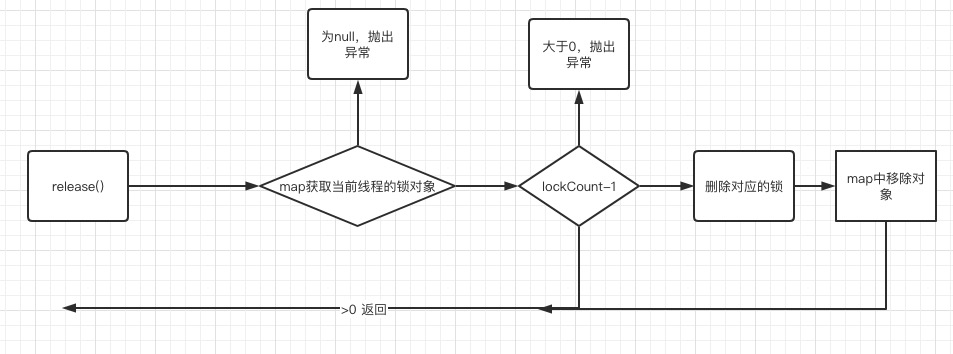
release (释放锁)
public void release() throws Exception
    {
        /*
            Note on concurrency: a given lockData instance
            can be only acted on by a single thread so locking isn't necessary
         */

        Thread currentThread = Thread.currentThread();   //获取当前线程
        LockData lockData = threadData.get(currentThread);  //从map中取到当前线程的锁
        if ( lockData == null )   //如果没有锁,抛出异常
        {
            throw new IllegalMonitorStateException("You do not own the lock: " + basePath);
        }
				//进行原子减操作
        int newLockCount = lockData.lockCount.decrementAndGet();
			  //如果大于0,返回
        if ( newLockCount > 0 )
        {
            return;
        }
				//如果减后小于0,说明已经多释放了一次,抛异常
        if ( newLockCount < 0 )
        {
            throw new IllegalMonitorStateException("Lock count has gone negative for lock: " + basePath);
        }
				//如果为0,说明当前是最后一个锁了,准备释放锁
        try
        {
            internals.releaseLock(lockData.lockPath);
        }
				//把节点删掉
        finally
        {
            threadData.remove(currentThread);
        }
    }
void releaseLock(String lockPath) throws Exception
{
revocable.set(null); //把存有的锁的信息删掉
deleteOurPath(lockPath); //把路径删掉
}获取锁的时候的调用图
释放锁时候的流程